
Hot Water
Hot Water System Installation Cost: What Drives the Price
Two hot water jobs in the same street can be priced very differently. Here’s what actually moves the number, and how to work out which kind of job you have.
· 7 min read
No hot water this morning? We diagnose gas, electric, heat pump and solar systems, tell you honestly whether it’s worth repairing, and can usually have you back in hot water the same day.
No call-out fee. We’ll call you straight back.
Available 24/7
Don’t wait for business hours. We run emergency call-outs across the Hills, Hornsby and the Upper North Shore, 24 hours a day.
Sound familiar?
If any of these describe what’s happening at your place, we can help — usually the same day.
On gas, usually the pilot or ignition. On electric, usually the element or thermostat. Both are often a repair, not a replacement.
A failed lower element in an electric unit, or a tank that’s undersized for how the household has changed.
Thermostat drift or a partially failed element. Cheap to fix if you catch it early.
The sacrificial anode has gone and the tank is corroding from the inside. This one is a countdown.
A leaking tank cannot be repaired. Turn it off at the isolation valve and call us.
Sediment build-up on the base. A flush often fixes it and adds years to the unit’s life.
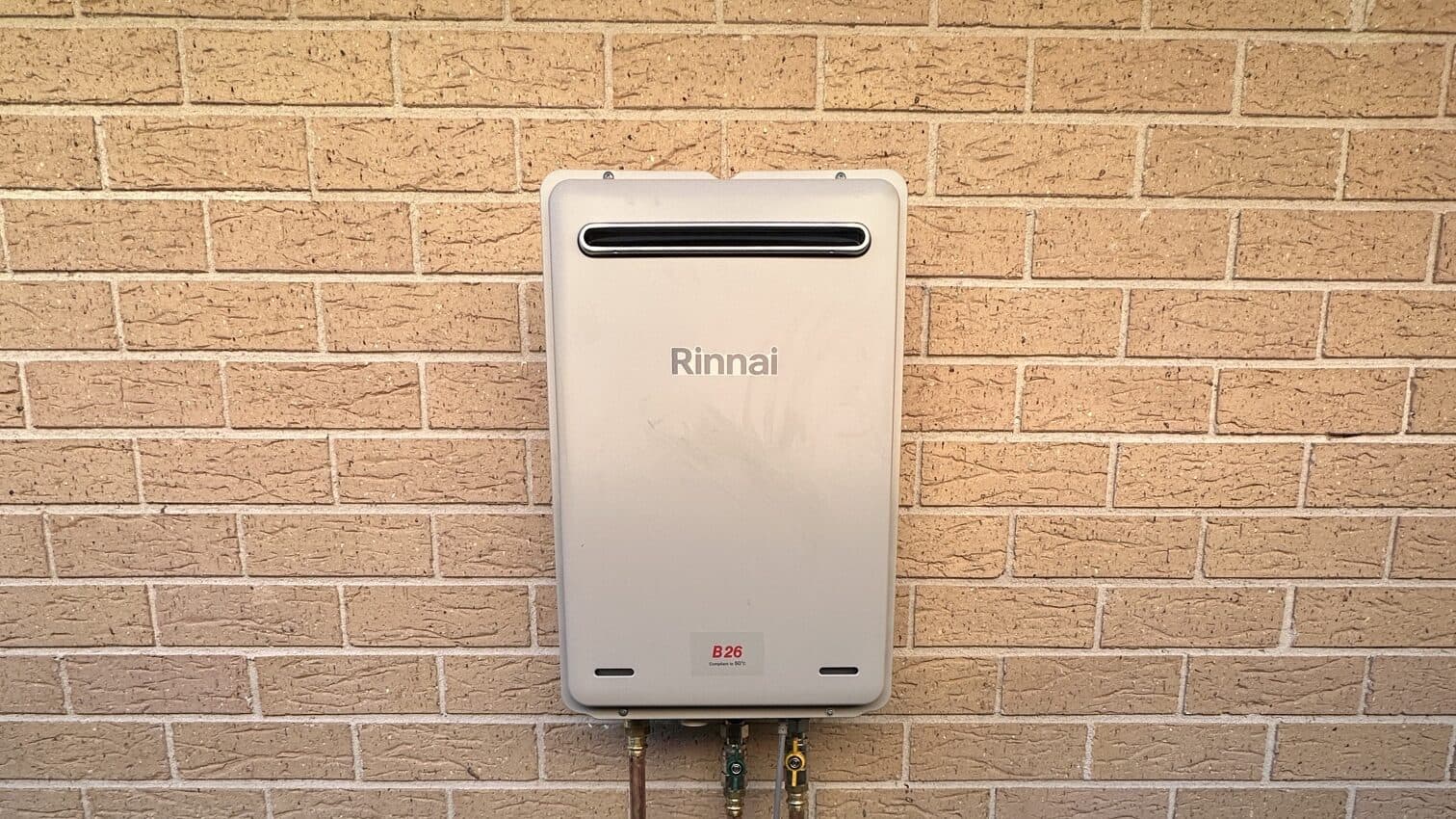
Plenty of hot water units get replaced when a single inexpensive part would have fixed them. Equally, plenty get patched up twice in a year when the tank was always going to fail.
The honest rule of thumb: if the tank itself is leaking, it’s replacement. If it’s an element, thermostat, valve, pilot assembly or gas valve, it’s almost always worth repairing — provided the unit is under about twelve years old. We’ll tell you which side of that line you’re on and what each option costs before you decide.
Gas storage and continuous flow, electric storage, heat pump and solar hot water. We service and install Rheem, Rinnai, Dux, Vulcan, Aquamax, Bosch, Thermann and Stiebel Eltron.
If you’re replacing, we’ll size the system to how your household actually uses hot water rather than just matching what’s there. A four-bedroom house in Kellyville with two teenagers has a very different demand curve to the couple who installed the original unit fifteen years ago.
Heat pump systems attract both federal STC incentives and NSW energy savings scheme rebates, which can take a meaningful chunk off the installed price. They run at roughly a third of the running cost of electric storage.
They’re not right for every house — they need outdoor space with airflow, and they’re audible, so placement next to a bedroom window is a bad idea. We’ll assess whether your site actually suits one rather than selling you the highest-margin option.
Every hot water installation we do includes a compliant tempering valve where required, a functioning temperature and pressure relief valve, a correctly sized and terminated relief drain, and a Certificate of Compliance lodged with NSW Fair Trading.
It sounds like paperwork. It matters when you sell the house, and it matters more if someone is ever scalded.
How it works
Most faults can be narrowed down over the phone before we arrive.
We test the unit properly and identify the actual failure.
Both options, both prices, no pressure either way.
Compliance certificate lodged and the old unit taken away.
Customer reviews
“I would like to thank Rohan & the team for coming to my home in Castle Hill. They did a fantastic job replacing my old hot water system, and they gave me a great deal on other plumbing options. The best thing was, they were neat and tidy compared to most other tradies I would highly recommend Precision Pipes”
“We recently used Ben from Precision Pipes and couldn’t be happier with the service. Ben was punctual, transparent, and kept us informed every step of the way. He went above and beyond to explain what was happening and made the whole process stress-free. If you’re looking for an honest, reliable plumber in the Hills District, I wouldn’t hesitate to recommend Ben and the team at Precision Pipes.”
“I’ve been using Precision Plumbing for the past year for both reactive and preventative plumbing maintenance. Rohan and his team have consistently been reliable, punctual, and professional, delivering high-quality workmanship on every job. I highly recommend Precision Plumbing to anyone looking for a trustworthy and dependable plumbing service.”
Where we work
Based in Castle Hill and covering the whole of the north-west and upper north shore.
Common questions
On a gas system, the most common cause is the pilot light or ignition failing, or the gas valve. On an electric system, it’s usually a failed heating element or thermostat, or the off-peak circuit not being energised. All of these are repairs rather than replacements. If you can see water pooling under the tank, that’s a failed tank and it needs replacing.
It comes down to the type of system, its size, and whether anything has to change to fit it — electric storage is the cheapest to install, gas continuous flow sits above it, and heat pumps are the most expensive up front but attract STC and NSW rebates that can move the figure substantially. Switching fuel type or relocating the unit adds work. Whatever we quote is fixed and includes removing the old unit, all fittings and the compliance certificate. Ring us with the make and size of your current system and we’ll price it over the phone.
Electric and gas storage tanks typically last 10–15 years. Continuous flow gas units often reach 20. Heat pumps are generally rated to 15. Replacing the sacrificial anode every five years genuinely extends a storage tank’s life and costs a fraction of a new unit — almost nobody does it.
Usually yes. We carry the common sizes of electric and gas storage units, so a straight swap can normally be done the day you call. Changing type — electric to heat pump, or storage to continuous flow — takes longer because it may need electrical or gas supply work.
If you’re on electric storage and paying peak rates, generally yes — running costs are roughly a third. If you’re on off-peak electric or have solar PV, the maths is closer and worth actually running rather than assuming. We’ll do that calculation with your real usage before you commit.
Always. Every hot water installation is lodged with NSW Fair Trading, and you get a copy. You will need it when you sell the property.
Advice
Two hot water jobs in the same street can be priced very differently. Here’s what actually moves the number, and how to work out which kind of job you have.
· 7 min read
A TMV holds water at a tighter, safer temperature than a tempering valve and shuts off if the cold fails. Here’s where they’re required and when a home should have one.
· 7 min read
What backflow is, how Sydney Water rates a property, which device goes with which hazard rating, and what the yearly test involves for the owner.
· 6 min read
No call-out fee, a fixed price before we start, and a lifetime labour warranty on everything we do.