
Hot Water
Hot Water System Installation Cost: What Drives the Price
Two hot water jobs in the same street can be priced very differently. Here’s what actually moves the number, and how to work out which kind of job you have.
· 7 min read
Smell gas, or need an appliance connected properly? We’re licensed gas fitters — every job is tested, certified and lodged, because this is the one trade where cutting corners actually kills people.
No call-out fee. We’ll call you straight back.
Available 24/7
Don’t wait for business hours. We run emergency call-outs across the Hills, Hornsby and the Upper North Shore, 24 hours a day.
Sound familiar?
If any of these describe what’s happening at your place, we can help — usually the same day.
Don’t touch switches. Turn the gas off at the meter, open the doors, get everyone out, then call from outside.
Incomplete combustion. It produces carbon monoxide. Stop using the appliance and get it checked.
Gas appliance connection is licensed work and needs a compliance certificate. Retailers don’t do it.
New runs need to be correctly sized for the appliance load, not just teed off the nearest line.
Usually a failing thermocouple. It’s a repair, and it’s a safety device doing its job.
Worth a pressure test. Small leaks cost money long before they become dangerous.
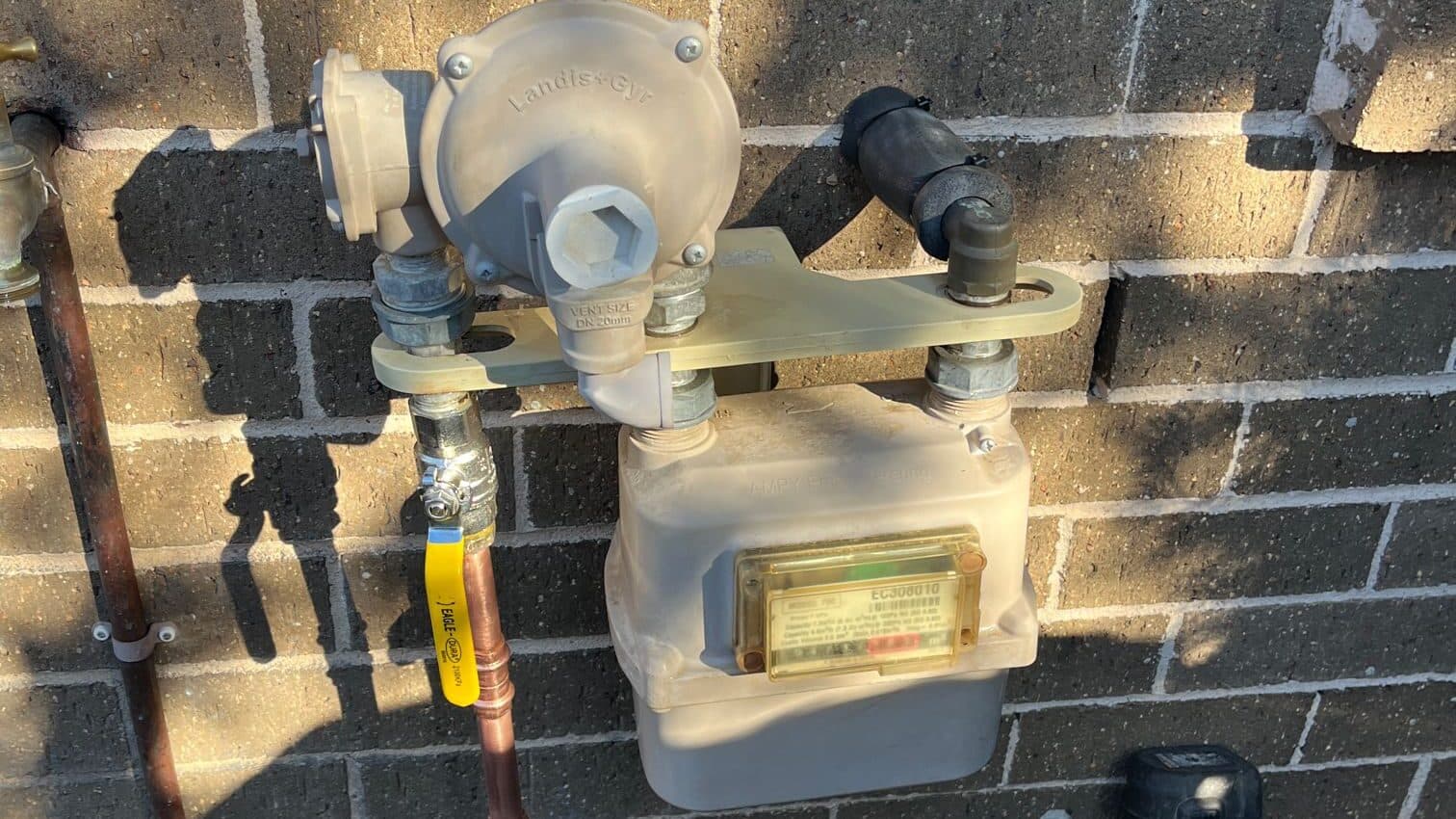
Turn the gas off at the meter. Open windows and doors. Do not operate any electrical switch, appliance or phone inside the building — including turning lights off, which produces the same spark as turning them on. Get everyone out, and call us from outside.
If the smell is strong or you feel unwell, leave immediately and call the gas emergency line on 131 909 first, then us.
Gas cooktops, ovens and freestanding cookers. Space heaters and flued heaters. Gas hot water — storage and continuous flow. Outdoor BBQ and firepit points. New gas runs, meter relocations, and appliance isolation valves.
Every installation gets pressure tested and a Certificate of Compliance lodged with NSW Fair Trading. You get a copy. Insurers and conveyancers both ask for these, and an uncertified gas installation is a real problem at claim time.
We pressure test the installation to find whether you have a leak, then use electronic detection to pinpoint it. Small leaks at fittings and unions are common in older installations and often produce a faint smell that people get used to and stop noticing.
Carbon monoxide is the other risk, and it’s the one with no smell at all. If you have a flued heater or an older gas appliance in a bedroom or living area, a CO test is genuinely worth doing before winter.
Gas work in NSW must be done by the holder of a gasfitting licence, and it must be certified. This isn’t bureaucracy — an incorrectly sized line, a poor joint or an unflued appliance in the wrong room causes fires and carbon monoxide poisoning.
We’re fully licensed and insured, and every job we do is tested and documented. If someone quotes you for gas work without mentioning a compliance certificate, that tells you something important.
How it works
We’ll confirm what’s involved and what it will cost.
New runs are sized for the appliance, not guessed.
Every joint tested before anything is commissioned.
Compliance certificate lodged with NSW Fair Trading, copy to you.
Customer reviews
“I would like to thank Rohan & the team for coming to my home in Castle Hill. They did a fantastic job replacing my old hot water system, and they gave me a great deal on other plumbing options. The best thing was, they were neat and tidy compared to most other tradies I would highly recommend Precision Pipes”
“We recently used Ben from Precision Pipes and couldn’t be happier with the service. Ben was punctual, transparent, and kept us informed every step of the way. He went above and beyond to explain what was happening and made the whole process stress-free. If you’re looking for an honest, reliable plumber in the Hills District, I wouldn’t hesitate to recommend Ben and the team at Precision Pipes.”
“I’ve been using Precision Plumbing for the past year for both reactive and preventative plumbing maintenance. Rohan and his team have consistently been reliable, punctual, and professional, delivering high-quality workmanship on every job. I highly recommend Precision Plumbing to anyone looking for a trustworthy and dependable plumbing service.”
Where we work
Based in Castle Hill and covering the whole of the north-west and upper north shore.
Common questions
Turn the gas off at the meter, open windows and doors, and get everyone outside. Do not touch any electrical switch or appliance — that includes light switches and your phone while you’re still inside. Call from outside. If the smell is strong, call the gas emergency line on 131 909 first.
Yes. Connecting any gas appliance in NSW is licensed work and requires a Certificate of Compliance. Retailers and general handypeople cannot legally do it, and an uncertified installation can void both your appliance warranty and your home insurance.
If there’s already a gas point where the cooktop is going, it’s a straightforward connection, test and compliance certificate. If a new point has to be run, the cost depends on how far it travels and how accessible the route is — under a suspended floor is easy, through a slab is not. We’ll tell you which situation you’re in and give you a fixed price before we start.
It’s the document certifying that gas work was performed by a licensed fitter to the relevant standard, and it’s lodged with NSW Fair Trading. You need it for insurance, and you’ll need it when you sell the property. We provide one on every gas job as a matter of course.
A yellow or orange flame means incomplete combustion, which produces carbon monoxide. Stop using the appliance and have it checked. Common causes are a blocked burner, incorrect gas pressure or inadequate ventilation — all fixable, but not something to leave.
Yes. We pressure test the installation to confirm a leak exists, then use electronic detection to pinpoint it, and provide a written report. Older installations very often have small leaks at fittings that have loosened over time.
Advice
Two hot water jobs in the same street can be priced very differently. Here’s what actually moves the number, and how to work out which kind of job you have.
· 7 min read
A TMV holds water at a tighter, safer temperature than a tempering valve and shuts off if the cold fails. Here’s where they’re required and when a home should have one.
· 7 min read
What backflow is, how Sydney Water rates a property, which device goes with which hazard rating, and what the yearly test involves for the owner.
· 6 min read
No call-out fee, a fixed price before we start, and a lifetime labour warranty on everything we do.